

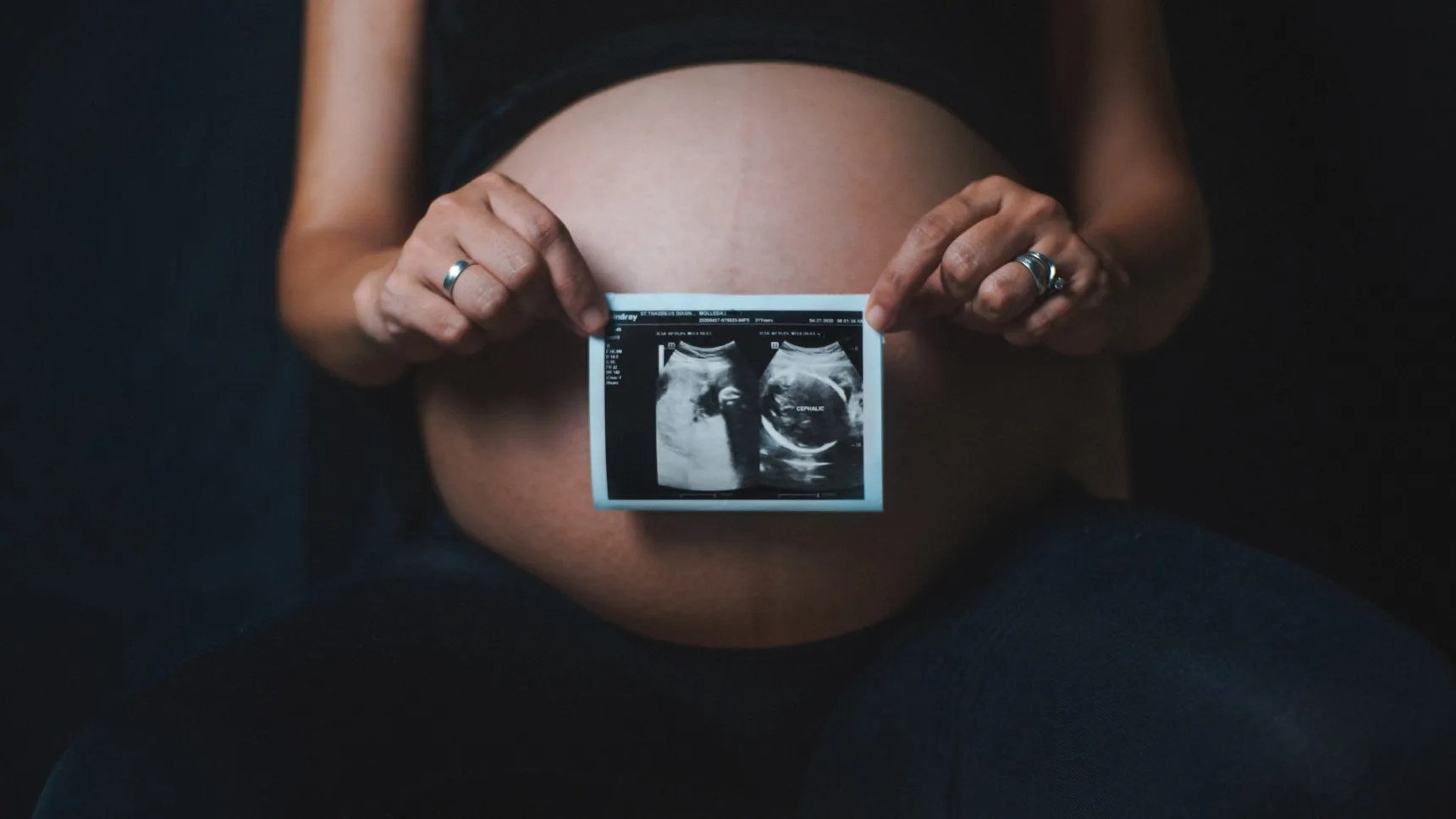
You don't need to document every week of pregnancy to create something worth keeping.
You don't need pages of perfect writing, either.
Some of the memories you'll treasure most later are small. Where you were when you found out. What you called the baby before you knew their name. The first movement that made everything suddenly feel real. Something your partner said that made you laugh.
The hard part is knowing which details are worth keeping. Pregnancy is busy, and small moments disappear fast.
So if you're staring at a blank page wondering what to write in your pregnancy journal, start here.
What should you write in a pregnancy journal?
A pregnancy journal can include the big milestones. But it becomes more personal when you also record the story around them.
Think about capturing:
- how you found out you were pregnant
- how you felt in those first days and weeks
- telling your partner, family or friends
- your first scan and seeing your baby for the first time
- the first movements or kicks you noticed
- the little changes, cravings and routines that defined this pregnancy
- baby names you considered along the way
- photos of your bump as it changed
- things your partner or family noticed and remembered
- your baby shower, gender reveal or other celebrations, if you had them
- preparing your home and life for your baby's arrival
- thoughts, worries, excitement and things that surprised you
- what each trimester felt like for you
- a letter to your baby before you meet them
You don't have to include all of these.
A useful rule is to ask:
If someone asked me about this pregnancy five years from now, what might I wish I could remember more clearly?
That's usually worth writing down.
What comes up when parents talk about keeping a journal in real life?
There is no shortage of lists telling expecting parents what they could write down.
But we looked through public conversations where parents talked about pregnancy journals, baby books and memory keeping. A slightly different problem kept appearing.
It wasn't usually a lack of things worth remembering.
It was finding a way to keep those memories without turning the journal itself into another obligation.
We reviewed 10 public discussions on Reddit and Peanut and noted recurring themes across each conversation.
What parents talked about most
Discussions mentioning each theme · out of 10
- Time and effort needed to keep up 10 / 10
- Photos and scans as memory triggers 10 / 10
- Prompts and structure — helpful or overwhelming 8 / 10
- Everyday details, not just milestones 7 / 10
- Falling behind or catching up after gaps 5 / 10
- Partner or family involvement 5 / 10
One pattern was especially clear:
There seems to be a useful middle ground between a completely blank page and a journal that asks too much of you.
Prompts can make it easier to know where to start. But rigid weekly pages and endless questions can backfire. They create the exact pressure a journal is supposed to remove.
That is worth remembering as you decide what to record.
Your pregnancy journal does not have to contain everything.
It just needs to help you keep the things you don't want to lose.
When should you start a pregnancy journal?
Whenever you want to.
Some people begin as soon as they see a positive pregnancy test. Others start after their first scan. Some start when they begin showing. Some start once the pregnancy feels more real.
And some people don't think about keeping a journal until much later.
There isn't a point where you've “missed your chance”.
If you're already halfway through your pregnancy, start halfway through.
If you're close to your due date, start there and work backwards only for the memories you still want to capture.
A pregnancy journal doesn't become more meaningful simply because it began in week four.
Start with the story of finding out
The positive pregnancy test might be easy to remember now. The details surrounding it probably won't be.
Where were you?
What time of day was it?
Did you believe the result immediately?
Was anyone with you?
Who was the first person you told?
What happened in the minutes afterwards?
You don't need to turn the moment into a beautifully written story. A few sentences with those details will give your future self much more than just a date.
Try these prompts
How did you discover you were pregnant?
What do you remember thinking immediately afterwards?
Who did you tell first, and how did they react?
Record the moments when pregnancy started to feel real
Pregnancy contains several moments that can suddenly change how real everything feels.
For some people it's the first scan.
For others, it's hearing a heartbeat. Noticing their bump changing. Buying something for the baby. Feeling that first unmistakable movement.
Instead of recording only that the milestone happened, write down your reaction to it.
What were you expecting?
What surprised you?
What do you remember about where you were?
What did you tell someone afterwards?
Those details often tell more of the story than the milestone itself.
“First kick” tells you what happened.
Where you were, what you were doing and who you immediately wanted to tell brings the moment back.
Keep the ordinary details too
Not every pregnancy memory needs to be a milestone.
In fact, some of the ordinary things may become the hardest to remember later.
That came through again and again in the parent discussions we reviewed. Alongside scans and major firsts, people talked about songs, food, routines and visits. They talked about little reactions and small things they noticed too — the everyday parts of their pregnancy.
Maybe there was a food you suddenly couldn't stand.
A song you kept playing.
A nickname for your bump.
A strange recurring dream.
A particular place you walked every afternoon.
Something your partner started doing for you.
A piece of clothing you practically lived in.
The series you watched every night.
A tiny ritual that became part of those months.
These details can feel insignificant while they're happening.
Years later, they're often the things that put you straight back into that period of your life.
Write about how you actually felt
Your pregnancy journal doesn't have to become a highlight reel.
You can be excited and overwhelmed.
Grateful and uncomfortable.
Confident one week and uncertain the next.
There may be parts of pregnancy you love and parts you would happily never repeat.
You don't need to manufacture a sentimental answer because you imagine your child reading it one day.
Writing something as simple as:
“This week was harder than I expected because…”
can tell a much richer story than trying to make every entry sound profound.
Your experience of pregnancy is part of the memory too.
Capture how things changed between trimesters
You don't have to maintain a week-by-week pregnancy diary to see how much changed.
Instead, pause once at the end of each trimester. That gives you three natural snapshots of your pregnancy.
Pick two or three of these and ask yourself:
What has surprised me most so far?
What feels different compared with a few months ago?
What am I enjoying right now?
What has been difficult?
What am I looking forward to next?
What do I think I'll remember about this stage?
Three honest reflections can tell your story better than dozens of forced entries.
What our own pregnancy journal taught us about what is worth recording
When we looked across Makia's Baby Bump Journal itself, something stood out.
Makia's pregnancy journal contains 64 structured prompt slots across the pregnancy and family story.
Of those:
How Makia's pregnancy journal is structured
- 70% · 45 are Quick Wins — dates, photos, short details, choices and simple answers
- 30% · 19 are Deep Reflections — moments where there is more of a story to tell
64 structured prompts analysed
The prompt formats tell a similar story:
- 41 invite a written response
- 9 ask for photos
- 7 capture a date
- 5 use a simple choice
- 2 capture a number
That means roughly 7 in every 10 structured prompts are deliberately designed to be quick to complete.
That balance is intentional.
Not every memory needs a paragraph.
The date you found out.
Where you were.
Who you told first.
When you first felt a kick.
The first thing you bought for your baby.
A photograph from the day.
Those tiny facts can become surprisingly powerful memory anchors later.
So more than one in three structured prompts don't require free-form writing at all.
Then there are moments where a little more space helps.
How did you feel when you found out?
What was it like seeing your baby at the first scan?
What did each trimester actually feel like?
How did you prepare for their arrival?
What do you remember most about the people celebrating alongside you?
And what would you like to say directly to your baby before you meet them?
A pregnancy story is bigger than pregnancy milestones
Looking across the journal also showed us how much of the story sits around the pregnancy itself.
Makia includes space for:
- the people your baby is joining — separate profiles for the parents, without assuming what your family looks like
- the story before baby — including how their parents met and photographs from that period
- finding out — when and where it happened, how you reacted and who you told
- the pregnancy itself — scans, first movements, due dates, trimester reflections and the first things bought for baby
- preparing and waiting — what life looked like while you were getting ready to meet them
- celebrations and people — baby showers, gender reveals, family, friends and favourite memories from those days
- photographs — visual memories throughout the story rather than just one formal image
- a letter to your baby — something written directly to the person all of these memories are ultimately for
And then there are Quick Thoughts.
Quick Thoughts deliberately don't have a predefined question.
They're just a place to capture what's on your mind — something you might want your baby to know one day.
Maybe something funny happened.
Maybe you've been thinking about who they're going to become.
Maybe your partner said something you don't want to forget.
Maybe nothing important happened at all — you simply had a thought you wanted to keep.
That matters. No set of pregnancy-journal prompts — including ours — can predict every memory that will matter to you.
How Makia captures a pregnancy story
Seven guided parts gather the people, feelings and moments that make the story yours.
- Family & the people baby is joining
- Finding out
- Pregnancy milestones & how it felt
- Preparing & waiting
- Celebrations & people
- Photos & visual memories
- A letter to baby
Quick Thoughts sit outside the structure, ready for the memories no prompt could predict.
You need both structure and freedom
This brought us back to the same tension we saw in the parent conversations we reviewed.
A completely blank journal can leave you wondering what to write.
But a journal that demands long answers to endless questions can start to feel like homework.
The useful middle ground seems to be:
enough structure to help you notice the memories worth keeping. Not so much that every memory needs a long answer, or that every thought has to fit a prompt.
A date can anchor a memory.
A photograph can bring it back.
A sentence can preserve a tiny detail.
A prompt can help you notice something you might otherwise overlook.
A Quick Thought can capture something no prompt could have anticipated.
And every now and then, a few paragraphs can preserve how it actually felt.
That mix is often enough to tell the story.
Add the photos that have a story attached to them
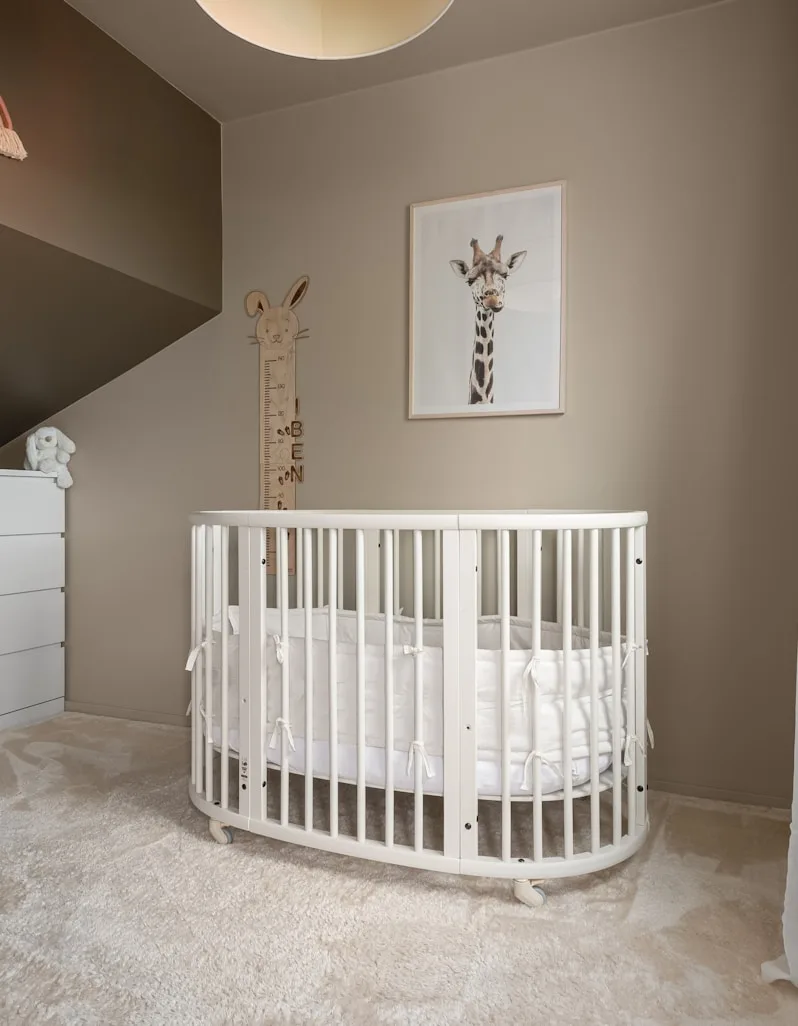

Bump photos and ultrasound images are obvious additions to a pregnancy journal, but don't stop there.
Think about the photographs surrounding your pregnancy too.
The place where you told your parents.
A photo from your baby shower.
The first tiny clothes you bought.
Your half-finished nursery.
A weekend away before the baby arrived.
A screenshot of the ridiculous baby-name list on your phone.
A meal you couldn't stop craving.
A photo your partner took when you weren't posing.
Your camera roll can contain far more of your pregnancy story than the photographs you deliberately took “for the journal”.
And the photograph itself is only half of the memory.
Add a sentence about why it mattered — what was happening, how you felt. That's often enough to preserve much more.
Include your partner or family
Pregnancy looks different depending on where you're standing.
Your partner may remember something you've completely forgotten. Your parents may have a story about the day you told them. Someone close to you may have noticed changes that you didn't.
Try asking them:
What do you think you'll remember most about this pregnancy?
Or:
What do you remember about the day we told you?
Their answer can become part of the journal alongside yours. In Makia's pregnancy journal, your partner can add their own memories to the same journal.
It also turns the journal into more than a record of appointments and milestones. It becomes a record of the people waiting for your baby too.
You don't need everyone to write an essay.
Sometimes a sentence in someone else's voice is enough to preserve a perspective you couldn't have written yourself.
Write down the preparation
There's a whole stretch of time before your baby arrives. It can disappear fast once they're actually here.
You might want to remember:
- choosing names
- preparing their room or sleeping space
- buying the first outfit
- packing your hospital bag
- the first baby item that appeared in your home
- deciding what you thought you would need
- conversations about what life might look like
- things you were nervous about
- things you were most excited to do together
There's something lovely about looking back later. You'll see the version of you who was still imagining what parenthood would be like.
Even the predictions that turn out to be completely wrong can become part of the story.
Write a letter to your baby
You don't need to know exactly what to say.
Tell them what life looks like right now.
Tell them what you've learned about them before you've even met.
Tell them what makes you smile when you think about them.
Tell them what you're looking forward to.
Tell them about the people waiting to meet them.
Or simply tell them what it has been like waiting for them.
A letter lets you stop just recording facts. You can write directly to the person at the centre of the story.
And it doesn't have to be long.
Sometimes a few paragraphs say enough.
What if you've already missed part of your pregnancy?
Start now.
You don't need to recreate every missing week.
And you probably remember more than you think once you give yourself a few clues.
Parents in the discussions we reviewed often did the same thing. They used what was already on their phones to bring memories back.
Try this:
-
Open your camera roll
Scroll back to the beginning of your pregnancy.
Look at the dates around scans, trips, celebrations, bump photos and seemingly ordinary days.
Photos often bring back the story around them.
-
Look through messages with your partner or someone close to you
You may find things like: a message you sent after an appointment. A conversation about baby names. A photo of a positive test. Something funny you had completely forgotten.
-
Check your calendar and appointments
Scan dates, appointments, trips, celebrations and other events can give you a simple timeline to work from.
-
Find your ultrasound photos and other keepsakes
Even if you don't remember exactly what you wrote or thought that week, the scan can still help. It may bring back where you were. Who came with you. How you felt afterwards.
-
Pick five moments
Not 20 weeks.
Not every appointment.
Just five moments that still stand out.
Write one or two sentences about each.
Then continue from today. You can start Makia's pregnancy journal partway through your pregnancy and begin from where you are.
A pregnancy journal with gaps still contains memories you otherwise might not have saved at all.
You don't have to write every week
There is no prize for completing a pregnancy journal perfectly.
In every discussion we reviewed, people talked about how much effort it takes to keep up with a journal.
That's worth paying attention to.
If weekly journalling feels enjoyable, do it.
If monthly reflections suit you better, do that.
If you only open your journal when something happens that you don't want to forget, that counts too.
The best rhythm is the one you're actually likely to keep.
For busy weeks, even one sentence can be enough:
Today I want to remember…
Finish that sentence and stop there if you want to.
You've captured something.
The goal isn't to record everything
Pregnancy gives you an almost endless list of things you could document.
Trying to save all of it can turn something meaningful into just another task.
Instead, look for the moments that tell your story.
The milestones.
The tiny details.
The photos with a story behind them.
The people around you.
The things that surprised you.
The thoughts you didn't expect to have.
The ordinary parts of life you suspect will be difficult to picture a few years from now.
And the moments your future self might wish they could experience just one more time.
Those are the things worth writing down.